Jr. NBA shifts focus to under-16s, with year-round play and better coaching key to developing Indian talent | NBA News
When some of India’s best school-level basketball talent returned from the Rising Stars Invitational in Singapore earlier this year, Sunny Malik asked them what they had learnt from the tournament. Their answer was straightforward. They had struggled to keep pace as the game wore on, and their stamina and endurance needed work.“They said that the level of competition showed us that we need to improve a lot more. We ended up lacking in stamina and endurance. That’s what those kids told me,” Malik, NBA India Country Head, told TimesofIndia.com on the sidelines of ACG Jr. NBA 3v3 National Tournament in Delhi last week.“Imagine the kind of learning that they have through that one game stating that by third quarter we were lot of losing it and fourth quarter we were down.”The players were already looking ahead to the next edition. They told Malik they would work on those weaknesses before returning to Singapore.“They said that if we are the best team in India next year and we participate in RSI next year, we assure you that we will go to at least semis. Because we will work on our stamina, we will work on our endurance and we will work on the weaknesses that we saw through the entire program,” he said.“That is what we want kids to know.”Malik returned to that experience while discussing the ACG Jr. NBA 3v3 National Tournament, where teams from schools with established basketball programmes competed alongside those from schools without the same infrastructure.The 2026 edition has moved from the under-14 to the under-16 category. The 10-city competition began in September and will culminate in national finals in December.Delhi recorded 270 team registrations across 118 schools: 193 boys’ teams and 77 girls’ teams.
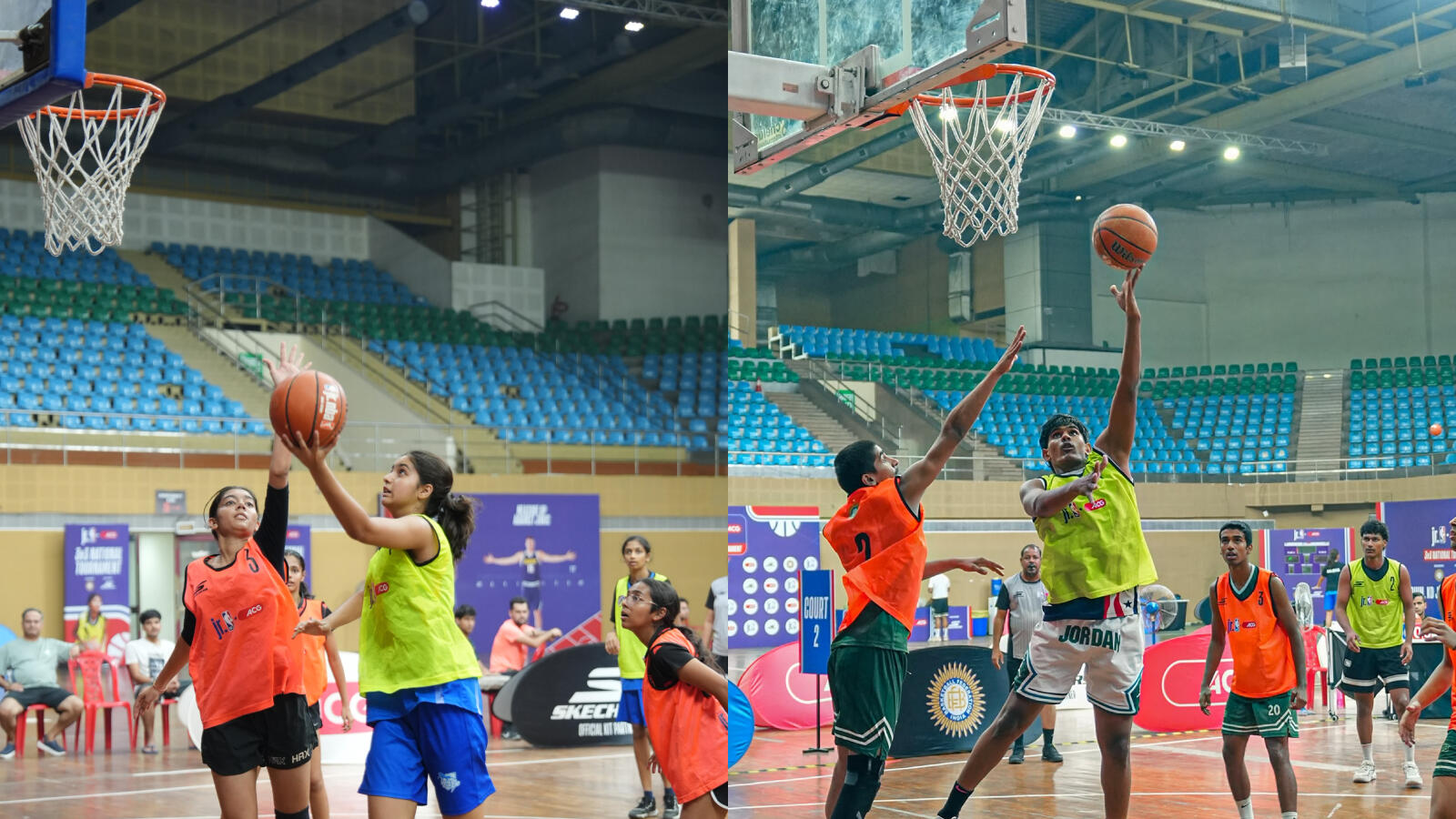
Girls and Boys in action during Jr NBA 3×3 National Tournament in Delhi (Image credit: Special arrangement)
For Malik, the tournament is an opportunity for players to discover the standard of competition beyond their own schools and assess what it takes to keep up.“The overall exposure and learning that they can get through this program, playing against the best teams coming in from a city or the outskirts of that city, is the main objective is,” he said.
Better strategy over physical prowess
During a girls’ game in Delhi, the difference in positioning was evident. In the half-court format, with 12 seconds to attack, one team struggled to find its positions while the other exploited the gaps. Malik, responding to the observation, said the difference was down to strategy rather than size.“Somewhere these kids are playing better because they are not bigger than their opposition; they [opposition] are playing better because their strategy is better,” Malik said.He sees that contrast between schools that have a structured basketball programme and those where children learn largely through experience. “And that’s where I see the difference between a school having a basketball program and school not having a basketball program because, you know, then they are running ad hoc, wanting to work not through a strategy but through their individual learning,” he said.“Whereas a school having a basketball program teaches you about this positioning, how do you pass, how do you ensure that you are able to score a bucket in that time that you have got.”The technical side of the game is only one part of what young players need to develop. Malik said the Singapore experience had also brought the physical and mental demands of international competition into focus.
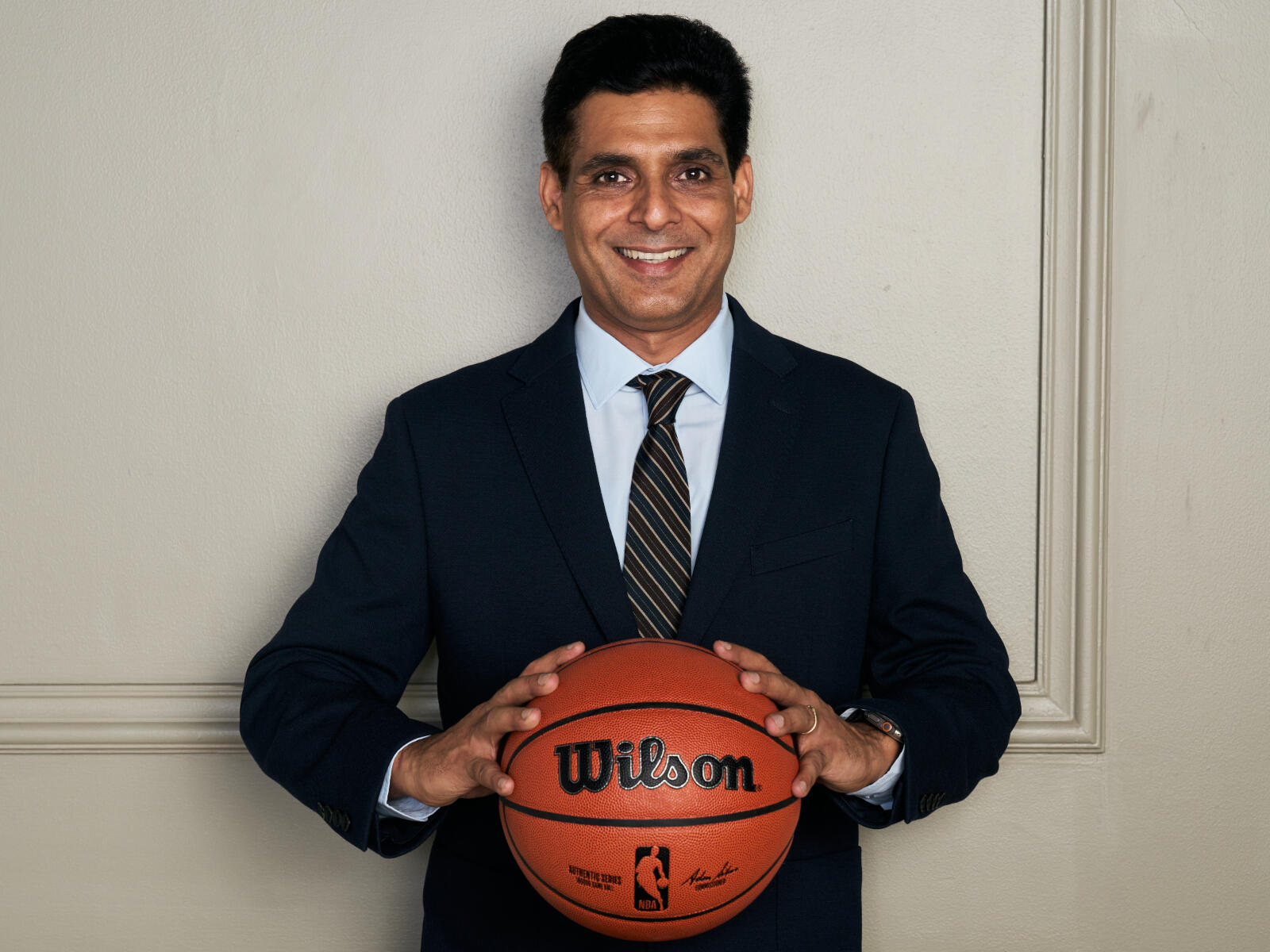
NBA India Country Head Sunny Malik (Image credit: Special arrangement)
“Personally, when I saw a lot of these teams playing at RSI, I felt the one thing that a lot of our teams have to work on is endurance, stamina building, mental conditioning,” he said.“Playing against the best in the world requires that toughness, that endurance, that you will continue for those four quarters at your peak.”
Malik wants greater investment in coaches
The Singapore experience also sharpened Malik’s view of what needs attention away from competition. He believes coaching development is one area of Indian sport that still requires more investment.“Coaches development is one area which probably, and that’s my personal take, gets ignored sometimes,” he said. “But that’s a very, very important part of the overall ecosystem development.”“Unless you invest in coaches, unless you support coaches with a training level which is world class, how do those coaches produce world-class talent? So investment in coaching, infra coaching ecosystem is an important part that every organisation should look into which is invested in sports. Only then can you produce world-class athletes from that.”The Jr. NBA programme has been running in India since 2013, reaching more than 15 million young people and 15,000 physical education instructors across 35 cities.
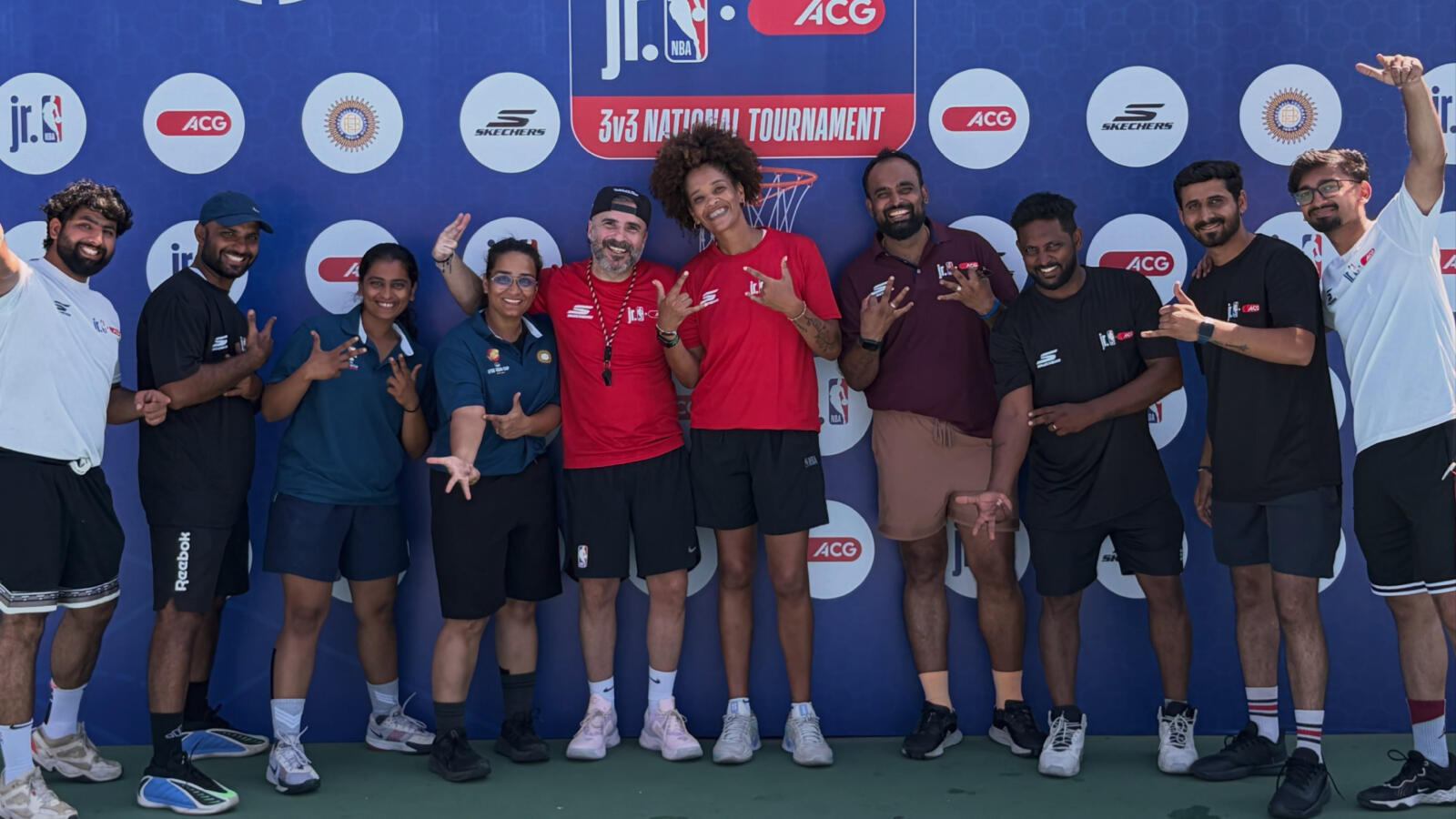
Natalia Andre (C) at the ACG Jr. NBA 3v3 National Tournament in Ahmedabad (Image credit: Special arrangement)
International coaches, including Natalia André, have been involved in coaching clinics and development work across the region. But Malik acknowledged the limits of a programme that moves between cities over a few days.“That’s challenging. If it’s a five-day program in the city, the best that you can do is train some of the coaches,” he said.“The best that you can do is, if you genuinely see some talent, you can sit with them, spend some time and explain them that where were they lacking so that they take those learning out of coaches like Natalia who is coming from outside world and seeing the best kids playing in the APAC or across the globe.”The work with coaches is intended to continue after the tournament teams leave. Malik said the programme had used coaching clinics to introduce local instructors to the curriculum and standards followed by international coaches.“Through the global coaches that we have, coaching clinics with them, trying to tell them what the right level of coaching is, what kind of curriculum do we follow,” he said.He put the responsibility on those coaches to keep children playing once the tournament window closes. “The objective is that participation should not stop once the program gets over,” Malik said.“So if it’s a four-month program, you don’t want kids to only play for four months. You want them to play through the year. And for that, these coaches have to play an important role in conditioning them, welding on the learnings that they have drawn through this competition, and then improving on those.”Malik said the coaching ecosystem had improved, but still needed support and investment if India was to produce world-class players.
More girls are playing; the league question remains
The Delhi numbers also reflect a broader feature of the Jr. NBA programme: girls’ participation. Malik said some city-level competitions had recorded girls’ participation of around 40-45%, a figure he found encouraging.“I personally don’t see a lot of sports where girls participation is as high as 45% in a city-level competition,” he said.“So, girls participation at 40-45% encourages us a lot that through this program you are also bringing in girls into the mainstream of sports. And that’s one of the big objectives that we have.”
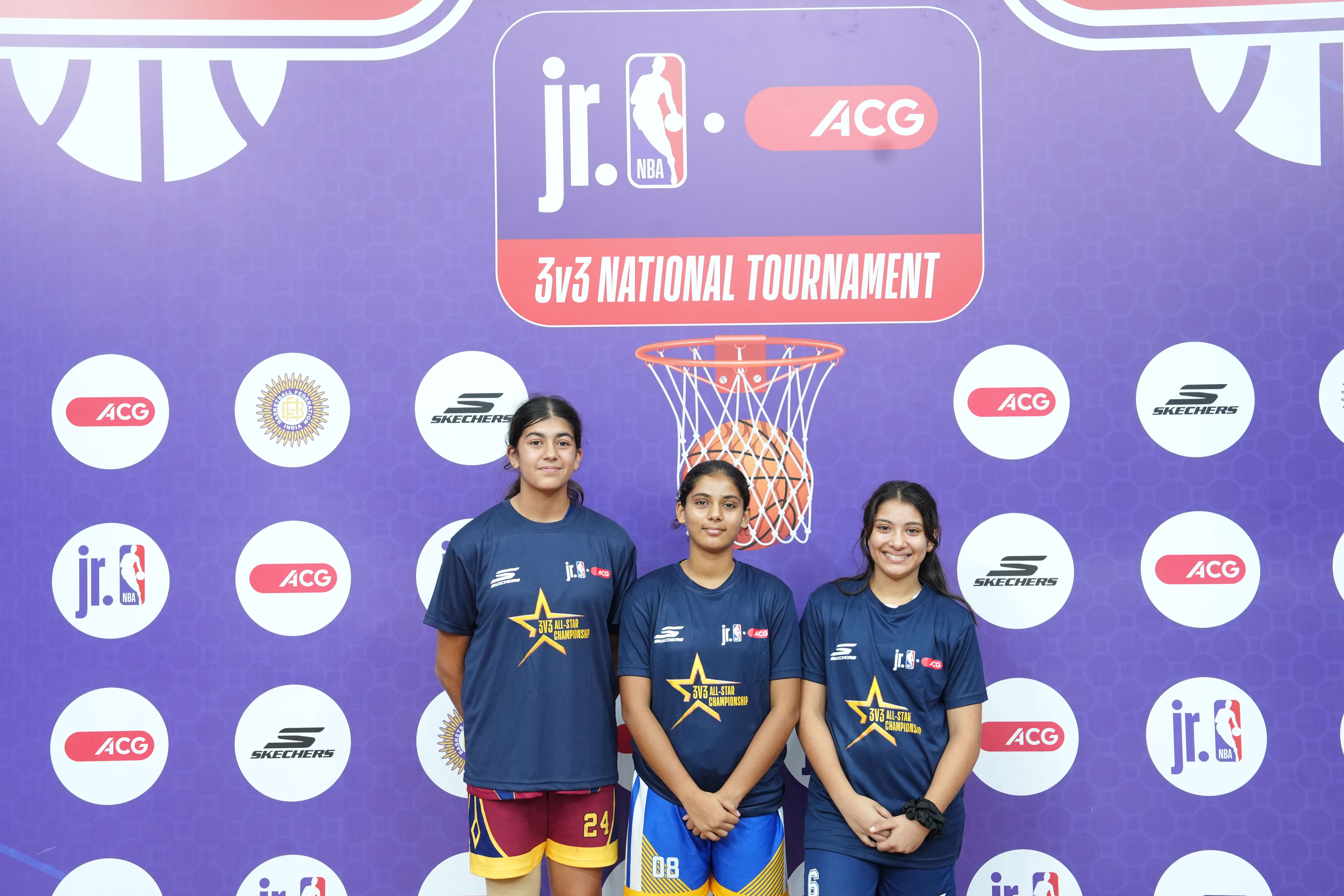
ACG Jr. NBA 2026 Delhi Leg U16 Girls’ All Star Team (Image credit: Special arrangement)
The tournament’s national finals are another step for teams that progress through the city competitions. After holding the finals in Delhi for the previous two years, organisers intend to stage this year’s event in Chennai.Malik said changing the venue would give players experience of competing in a different city and arena. “Because if these kids have to play at national level, they will be, you know, going across the country. You don’t want to just stay to one location,” he said.“Similarly, ACG Junior NBA finals across different cities would always, you know, be helpful for these kids who are getting into a final. They are getting into more exposure into a different city, different environment, different arena, different exposure.”The top two boys’ teams and top two girls’ teams from each city, along with selected all-star teams, are set to qualify for the December finals.Whether the competition can help players move towards professional basketball is a separate question. A proposed Indian basketball league could provide another platform. For Malik, though, its talent-identification process would become clearer as the plans take shape.“I think anything which helps basketball in the country, NBA would always be the first one to support that initiative. We would love to support any initiative which gets kids the pathway that they are looking at,” he said.“Getting kids the pathway, getting kids the right platform to showcase their talent is a great initiative. We are definitely in support of anything which helps basketball in the country.”He also wants the sport to attract a wider audience. “As a category, it’s important for basketball to become prime time. As a category, it’s important for people to watch, people to play, people to participate. We are in support of any initiative helping basketball.”Asked whether players in the under-16 tournament could progress into the proposed league, Malik said he was not privy to its structure or the plans of its coaches and scouts.
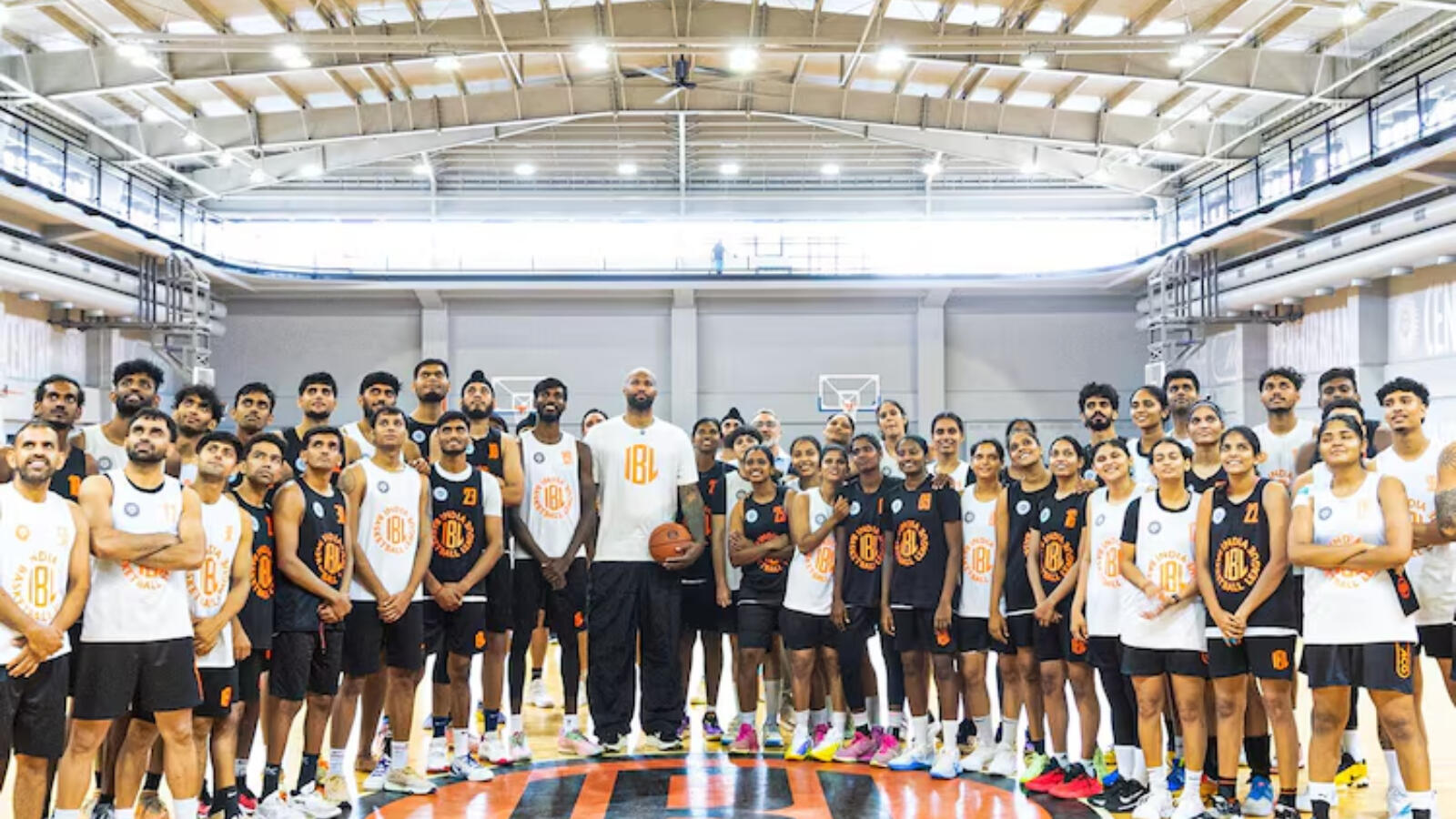
DeMarcus Cousins with players from the India Basketball League (Image credit: Special arrangement)
He did, however, point to the existing partnership between ACG and the Jr. NBA programme, saying players who performed well could come to the attention of organisations looking for talent.“Some of these talents, which would do well at these levels, would automatically form a part of the larger talent pool, which would be visible to everyone,” he said.The under-16 tournament offers a competitive platform, but what happens after December will depend in part on whether players continue to train and compete. Malik’s expectation is clear: the four-month programme should not be the only time they play.